The Armor of Mobility: Why Football Stays Fluid to Stay Powerful
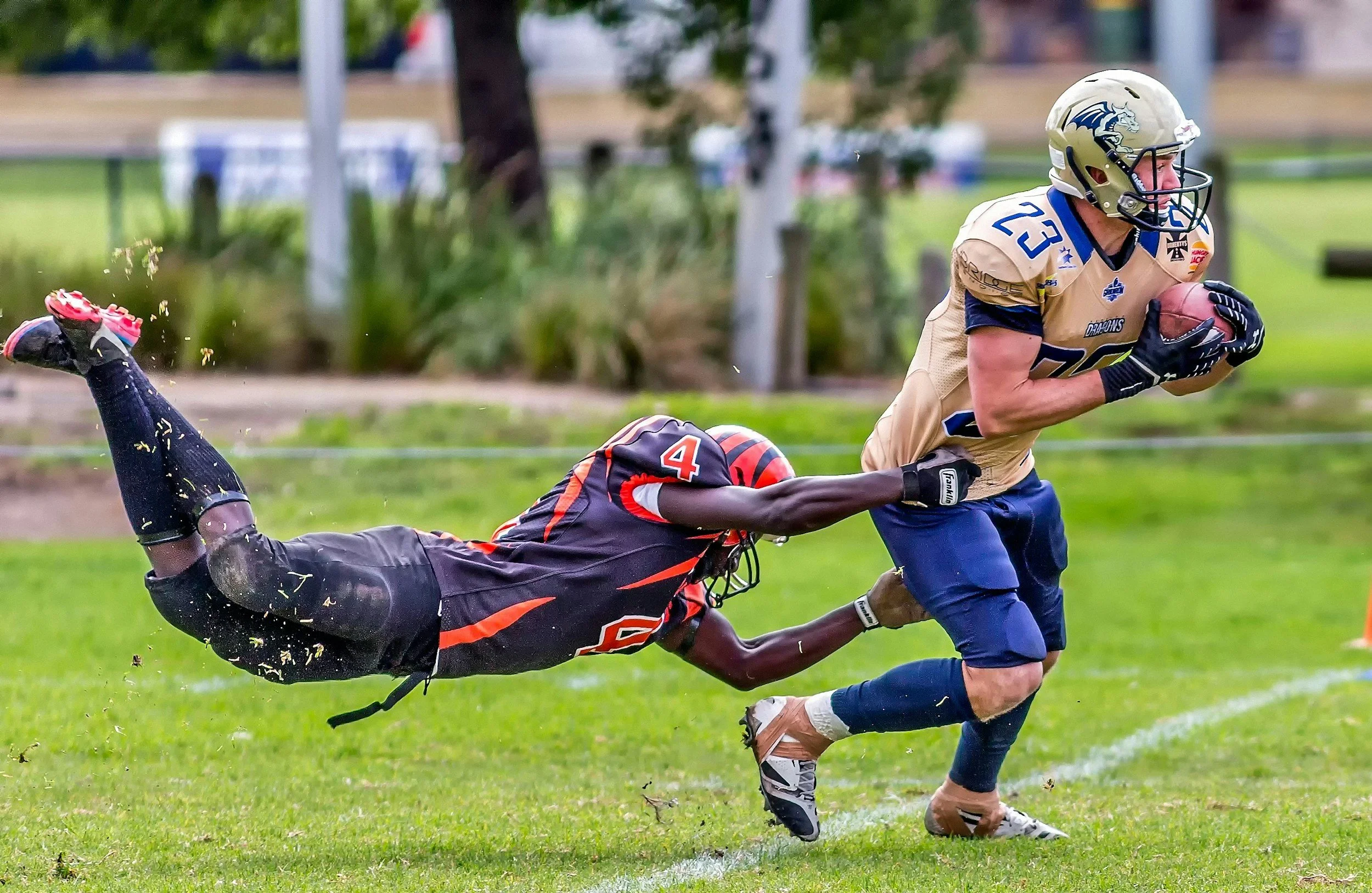
If you're getting washed out on blocks or losing your "get-off" speed by the second half, it’s probably not a strength issue. It’s a mobility issue. In football, flexibility isn't about being "bendy"—it’s about End-Range Strength. If you can reach a position but can't hold it under a 250lb load, you aren't flexible; you’re a liability.
Want free elite athlete resources?
Join the Alta Pursuit Membership and get:
✅ Downloadable worksheets
✅ Athlete performance planners
✅ Elite Coaching Advice
The Physics: "Low Man Wins"
You’ve heard your coaches scream "Low man wins!" since freshman year. But here is the science: winning is decided by the "Power V"—the sharp angle between your shins and your torso.
If your ankles are tight (poor dorsiflexion), your heels will lift when you try to get low. The moment those heels leave the turf, your weight shifts to your toes, your base becomes unstable, and you lose 30-40% of your power. Tier One athletes have "deep" ankles that let them sit in a hole and explode out of it while keeping their entire foot planted.
Case Study: Quenton Nelson (NFL All-Pro Guard)
Scouts call Nelson a "generational" talent because of his leverage. Most guys stand up too early because their hips are too tight to stay down. Nelson can keep his hips inches from the grass with a completely flat back.
He isn't just "stronger" than the guy across from him; he is more mobile. Because his ankles and hips allow him to stay in that "Power V" longer, he can apply 100% of his force into the defender's chest while the defender is busy just trying to stay balanced.
The Technical Concept: Joint Dissociation
You need to be able to move your upper body independently of your lower body. If you're a QB or a WR, your T-Spine (mid-back) needs to rotate while your hips stay locked on your path. If your back is stiff, your whole body turns together, which slows down your breaks and kills the velocity on your throws. We use mobility to "unlock" your spine so your arms and legs can do their jobs separately.
The Technical Concept: Posterior Chain Compliance
If your hamstrings are tight, they act like a "brake" on your hip flexors. Every time you try to drive your knee forward, your tight hamstring pulls it back. By increasing "Active Flexibility," you remove the brakes, allowing for a longer, more powerful stride without extra effort.
The 10-Minute "Armor" Warm-Up
| Time | Task | Objective | The "Why" (Student Focus) |
|---|---|---|---|
| 0-2 min | Cat-Cow to Down-Dog | T-Spine & Chain | Decompresses your spine after heavy lifting and wakes up your hamstrings. |
| 2-4 min | 90/90 Hip Switches | Hip Capsule | Clears the "hip pinch" so you can sit deep in your stance without pain. |
| 4-6 min | World's Greatest Stretch | Total Body | Opens your mid-back for better throwing/catching and hip flexors for speed. |
| 6-8 min | Banded Ankle Rocks | Ankle Joint | Manually clears the ankle joint to allow for those deep "Power V" shin angles. |
| 8-10 min | Explosive Stance Starts | CNS Activation | Teaches your brain to move fast from a deep, mobile position. |
Tier One Tip: Film yourself in your stance from the side. If your back is rounded or your heels are up, your "Armor" is broken. You're losing the leverage battle before the ball is even snapped.
ELITE ATHLETE COACHING
〰️
ELITE ATHLETE COACHING 〰️
Your "Tier One" Athlete Membership is the competitive edge you’ve been looking for. Get immediate access to exclusive tools and resources designed to sharpen your mindset and fast-track your path to Tier One Status in sports and in life. It's time to build the proof.