Dome to Dirt: Adjusting Your Mechanics for the Outdoor Transition
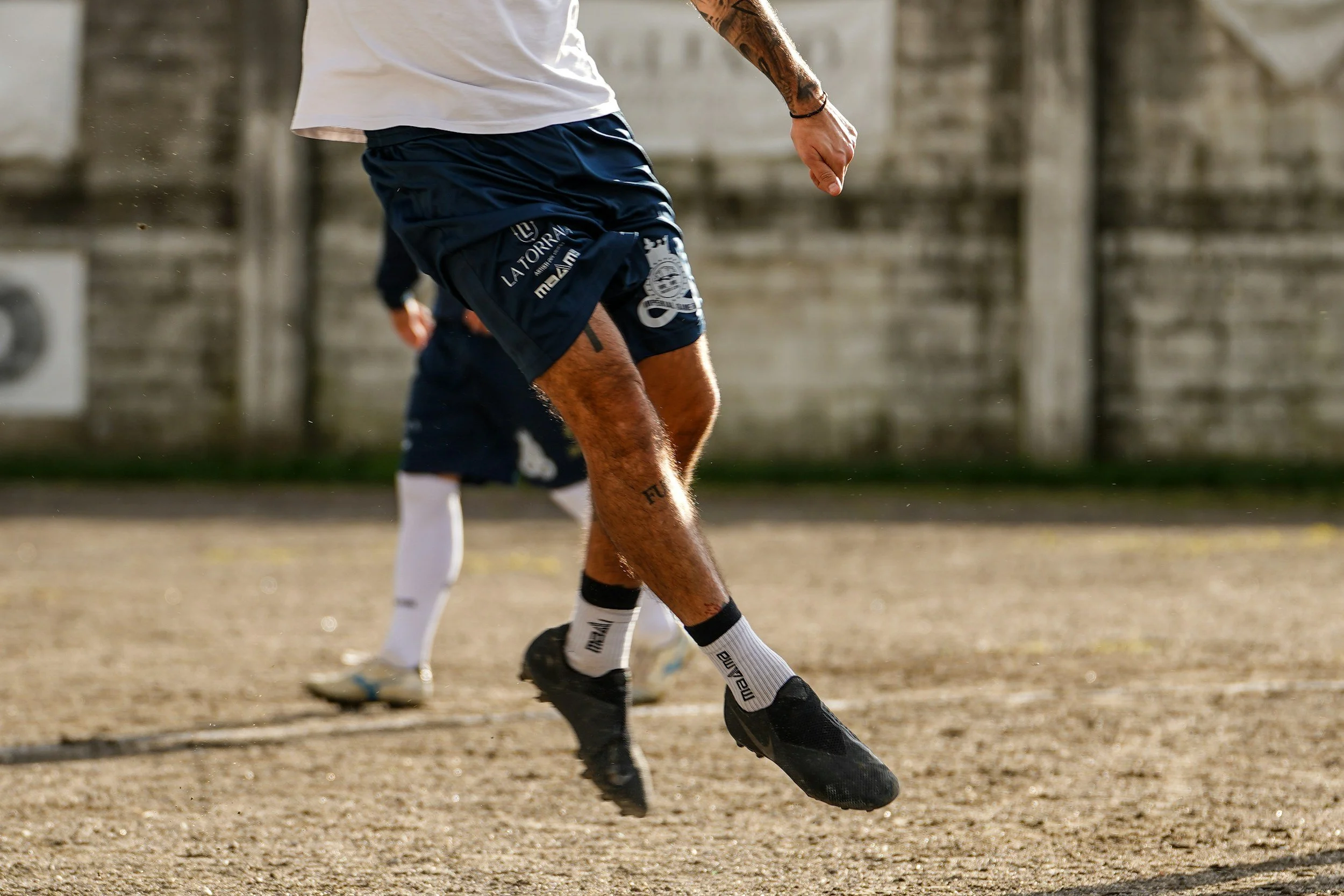
For most Canadian athletes, April is the month of the "Surface Shock." You’ve spent four months training on perfect, high-friction indoor turf, and now you’re stepping onto a soggy, uneven field in London or Toronto. As a strength coach, I see a massive spike in groin strains and ankle rolls during this transition. Your nervous system is used to the "hard stop" of turf, but grass requires a "soft landing."
This article is your manual for adjusting your Ankle Stiffness (Article 70) and your Force Vector (Article 59) to survive the shift from the dome to the dirt.
“Indoor turf gives you a fake sense of security. Outdoor grass requires a higher level of joint stability. If you don’t adjust your mechanics, the mud will take your ACL.”
Want free elite athlete resources?
Join the Alta Pursuit Membership and get:
✅ Downloadable worksheets
✅ Athlete performance planners
✅ Elite Coaching Advice
1. The Physics: Surface Compliance
Indoor turf is "High Compliance"—it doesn't move. When you cut, 100% of the force goes into your joints. Outdoor spring grass is "Low Compliance"—it gives way.
The Danger: If you try to make a high-velocity cut on wet grass with the same intensity you used in the dome, your foot will slide. Your brain will panic, causing you to over-contract your adductors. This is how "The Groin Trap" (Article 22) happens.
The Adjustment: In the first two weeks outdoors, focus on "Short-Arc" cutting. Don't try to change direction at 100% velocity until you've recalibrated your "Traction Map."
2. Biomechanics: The "Muddy" First Step
Acceleration on grass requires a different Shin Angle.
Indoor: You can get away with a very low, aggressive angle because the turf has infinite grip.
Outdoor: You need a slightly more vertical shin on the first step to ensure your cleats actually penetrate the soil. If you stay too low, you’ll just "slip-spin" your wheels like a car in the snow.
3. Tactical Insight: The "Cleat Audit"
Most 16-year-olds use the same cleats for everything. This is a Tier One mistake.
Indoor Cleats: Usually have shorter, more numerous studs.
Soft Ground (SG) Cleats: Longer, metal-tipped studs are essential for early spring in Canada. If you are playing on a "Standard" firm-ground (FG) plate on a wet April field, you are playing with an emergency brake on.
4. The Tier One "Surface Reset" Protocol
Do this for the first 3 outdoor practices to "re-map" your balance.
| Drill | Objective | The Technical Cue |
|---|---|---|
| Barefoot Grass Walks | Sensory Input | Walk on the field barefoot for 5 mins to wake up the Short Foot (Article 78). |
| Linear-to-Lateral Decel | Braking Calibration | Sprint 10 yards, then take 3 steps to stop. Feel how the ground gives way. |
| The "Slop" Shuffle | Reactive Stability | Perform defensive slides in the muddiest part of the field. Find your "edge." |
ELITE ATHLETE COACHING
〰️
ELITE ATHLETE COACHING 〰️
Your "Tier One" Athlete Membership is the competitive edge you’ve been looking for. Get immediate access to exclusive tools and resources designed to sharpen your mindset and fast-track your path to Tier One Status in sports and in life. It's time to build the proof.