The Torque Deficit: Why Your Shoulder Hurts When You Spike
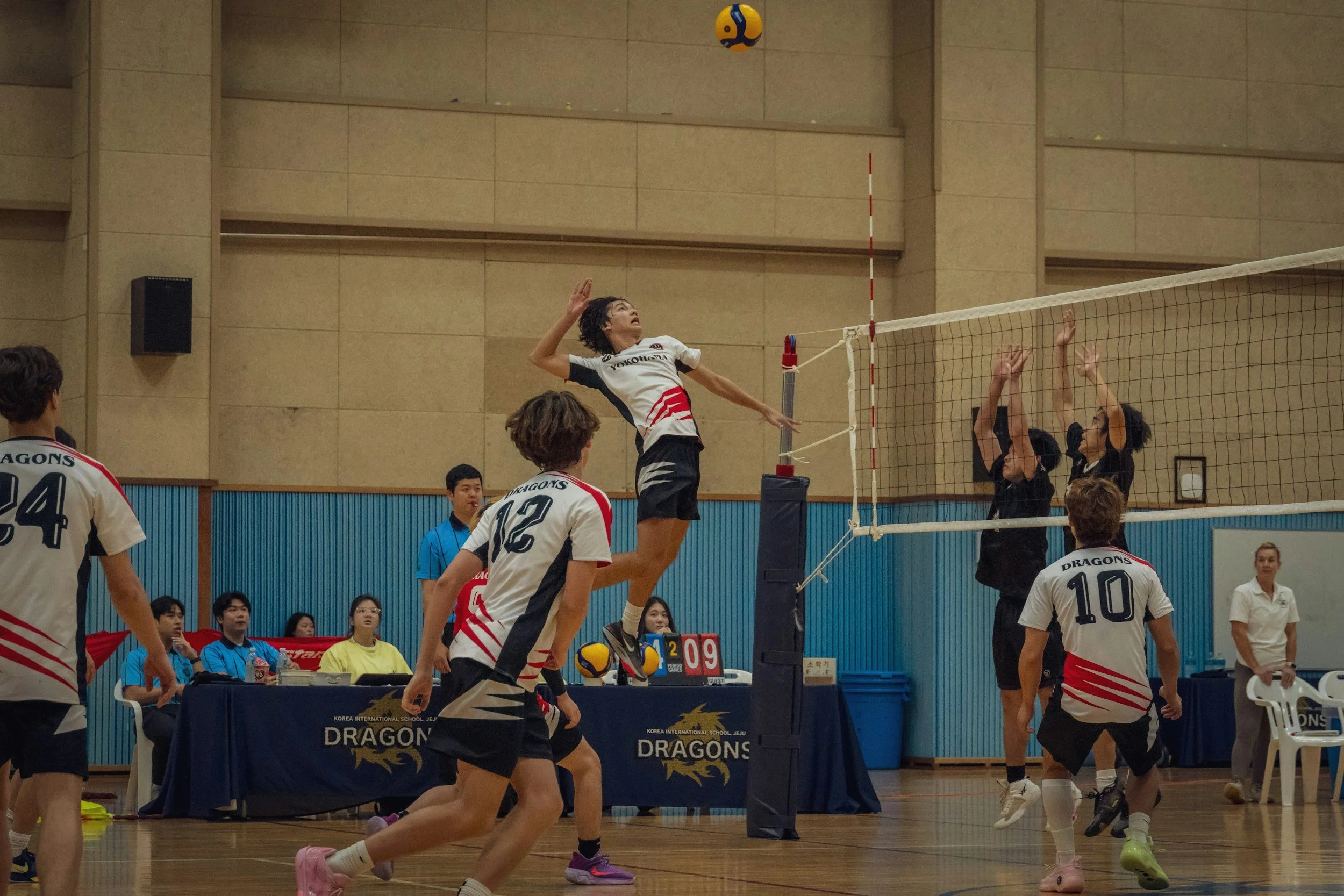
To understand power, imagine a whip. The handle moves first, and the tip moves last (and fastest). In volleyball, your body is the handle; your hand is the tip.
The Mistake (All Arm): Young players jump and stay "square" to the net. They try to generate all the speed by swinging their shoulder joint forward. This is like trying to throw a cannonball with a fishing rod. The shoulder is too small to handle that force.
The Pro Move (Torque): Elite hitters use "Separation." When they jump, their hips might face the net, but their chest rotates away from the net. This twists the spine like a coiled spring.
The Solution: "Open the Door, Slam the Door"
We teach the swing in two distinct phases of rotation.
The Draw (Open the Door): As you jump, you must pull your hitting elbow back and rotate your chest toward the back corner of the court. You are "winding up" your thoracic spine.
The Snap (Slam the Door): Before your arm moves forward, your chest must rotate back to the front. This rapid rotation pulls the arm through automatically. The arm is just along for the ride.
Want more resources like this guide?
Join the Alta Pursuit Membership and get:
✅ Downloadable worksheets
✅ Athlete performance planners
✅ Elite Coaching Advice
| Feature | The "Shoulder Pain" Swing | The "Heavy Hitter" Swing |
|---|---|---|
| Power Source | Rotator Cuff & Deltoid (Small muscles). | Obliques, Lats & T-Spine (Big muscles). |
| Chest Position | Square (Facing the net the whole time). | Rotated (Opens 45-90 degrees away). |
| Elbow Position | Low (Pushing the ball). | High & Back (Drawing the bow). |
| Follow Through | Abrupt Stop (Brakes on). | Cross-Body Whip (Full rotation). |
| Sound on Ball | Slap (Surface contact). | Pop/Thud (Deep contact). |
The Progression: Building the Whip
You cannot just "tell" an athlete to rotate; you have to build the mobility first.
Level 1: The "Open Book" (Mobility)
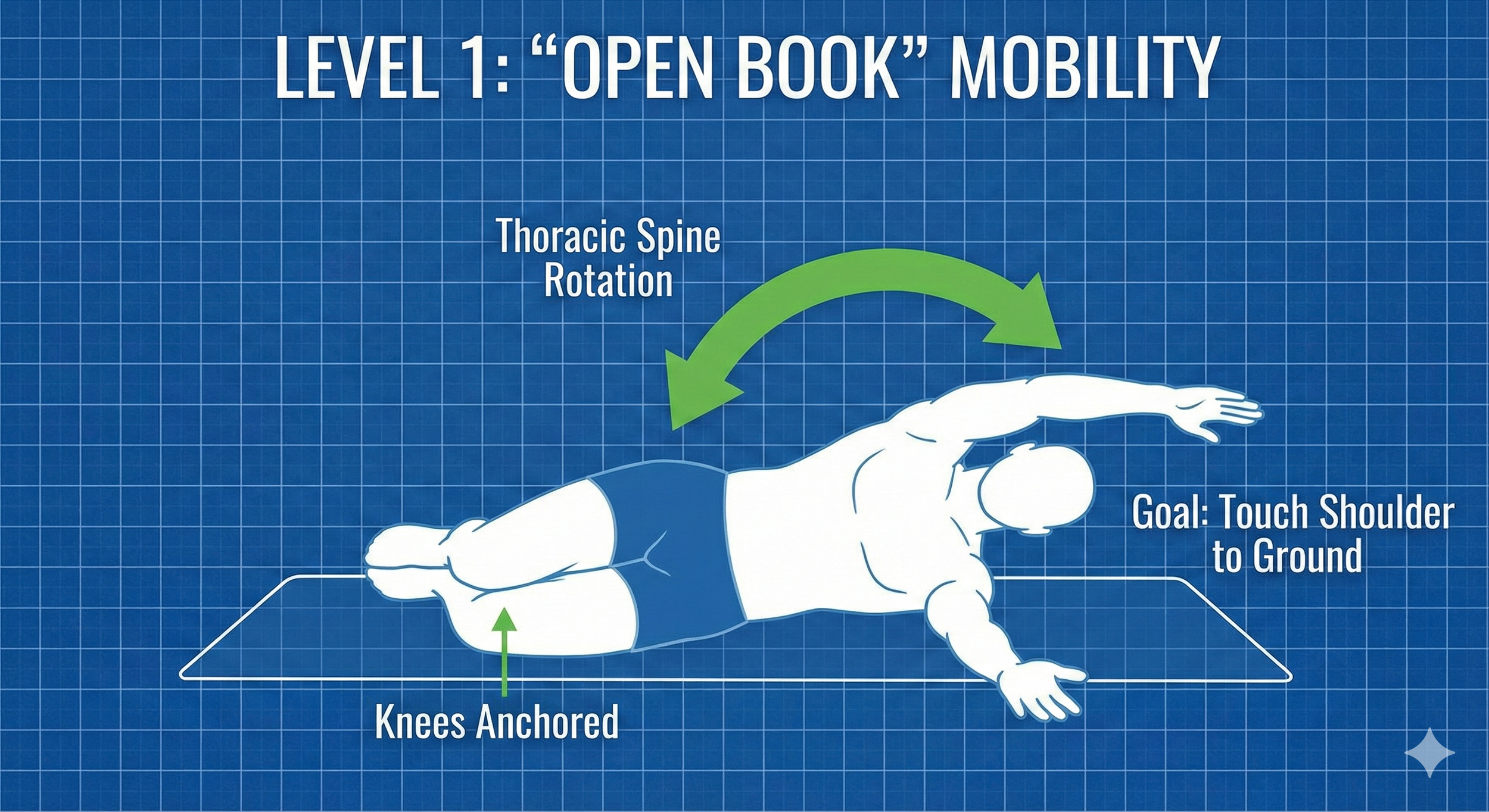
Setup: Lie on your side, knees bent at 90 degrees.
Action: Keep your knees pinned to the floor. Rotate your top arm and chest open to try and touch your shoulder blade to the ground behind you.
Goal: If you can't touch the ground without lifting your knees, your T-Spine is too stiff to hit safely.
Level 2: The Kneeling "Bow and Arrow" (Patterning)
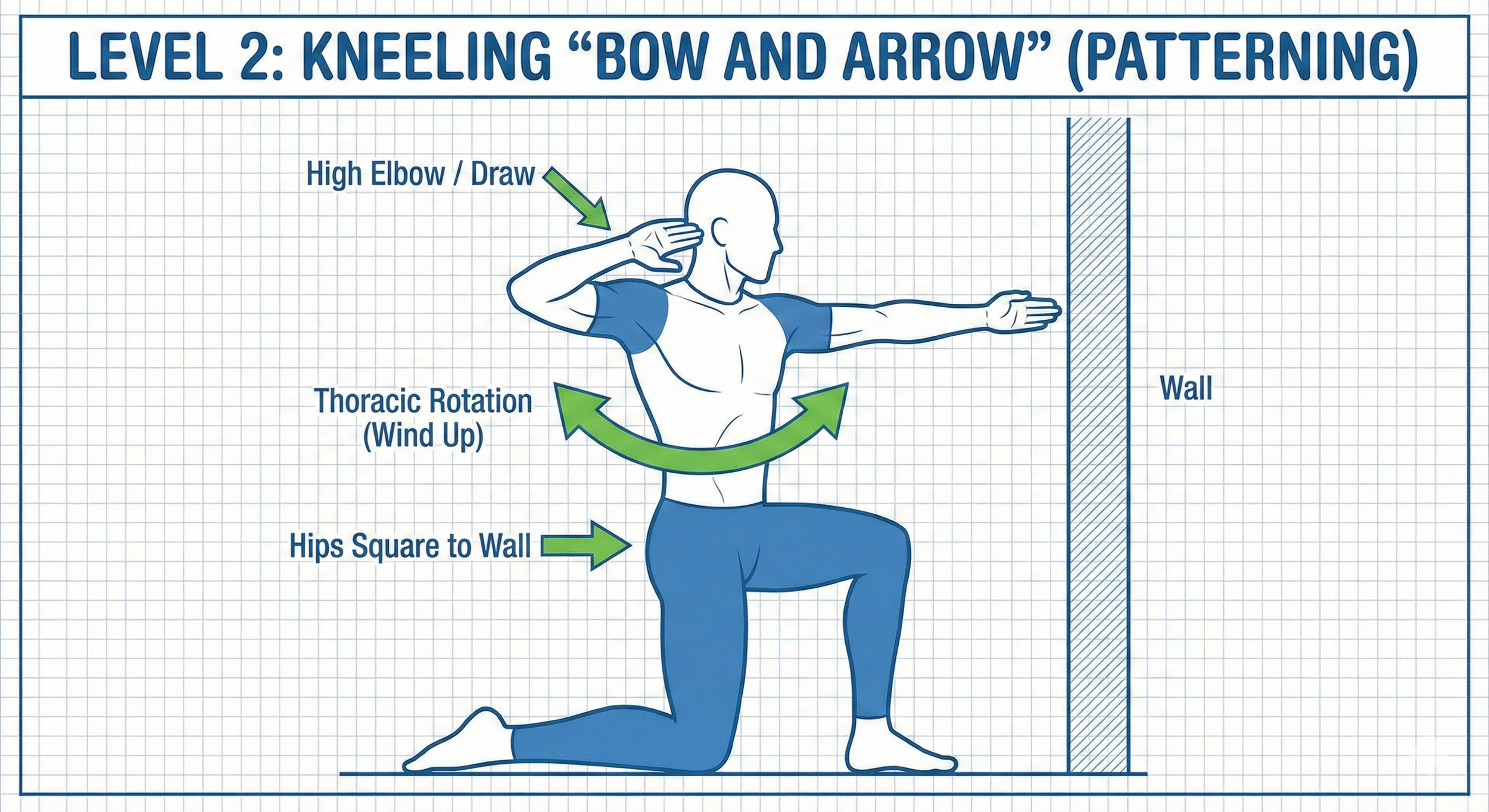
Setup: Kneel on one knee (hitting side knee is down). Face a wall.
Action: Draw your elbow back and rotate your chest 90 degrees away from the wall.
The Trigger: Squeeze your glute and snap your chest back to face the wall without letting your arm fly yet. Feel the stretch across your chest.
Level 3: The Wall Spike (Power)
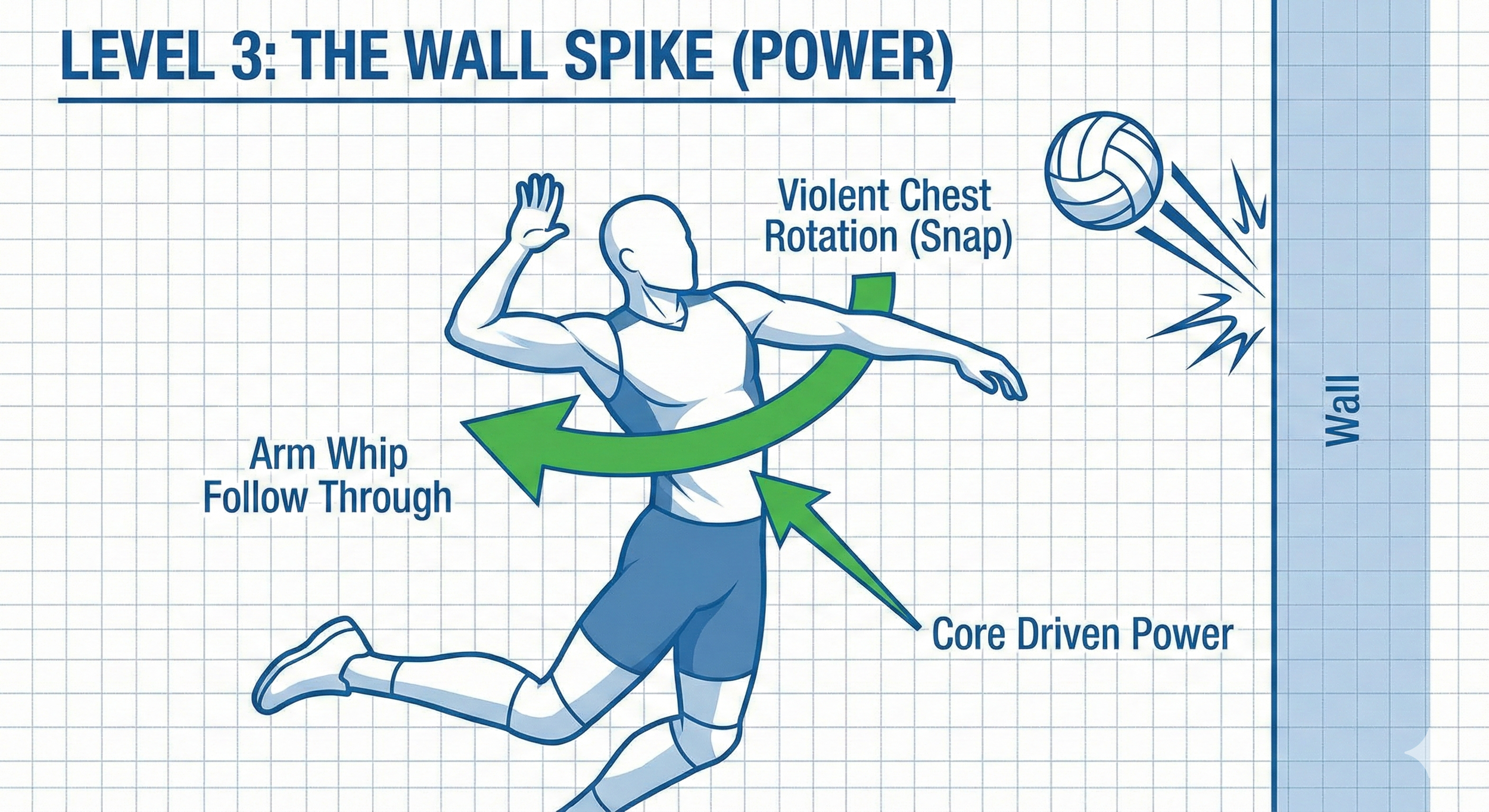
Setup: Stand 5 feet from a wall.
Action: Toss the ball up. Rotate your chest open (wind up), then violently rotate your chest forward to spike the ball into the floor so it bounces off the wall.
Focus: Do not focus on the arm. Focus on how fast you can rotate your nipples from "facing right" to "facing front."
The "Sound" Test
As a parent or coach, close your eyes. Listen to the hit.
A "Slap" means the hand is hitting the ball, but there is no mass behind it.
A deep "Thud" or "Pop" means the core struck the ball through the hand. That is the sound of Torque.
Join the Alta Pursuit Athlete Community today and transform your potential into elite.
ELITE ATHLETE COACHING
〰️
ELITE ATHLETE COACHING 〰️
Your "Tier One" Athlete Membership is the competitive edge you’ve been looking for. Get immediate access to exclusive tools and resources designed to sharpen your mindset and fast-track your path to Tier One Status in sports and in life. It's time to build the proof.