Why the Pull-Up is the Ultimate Test of Relative Strength
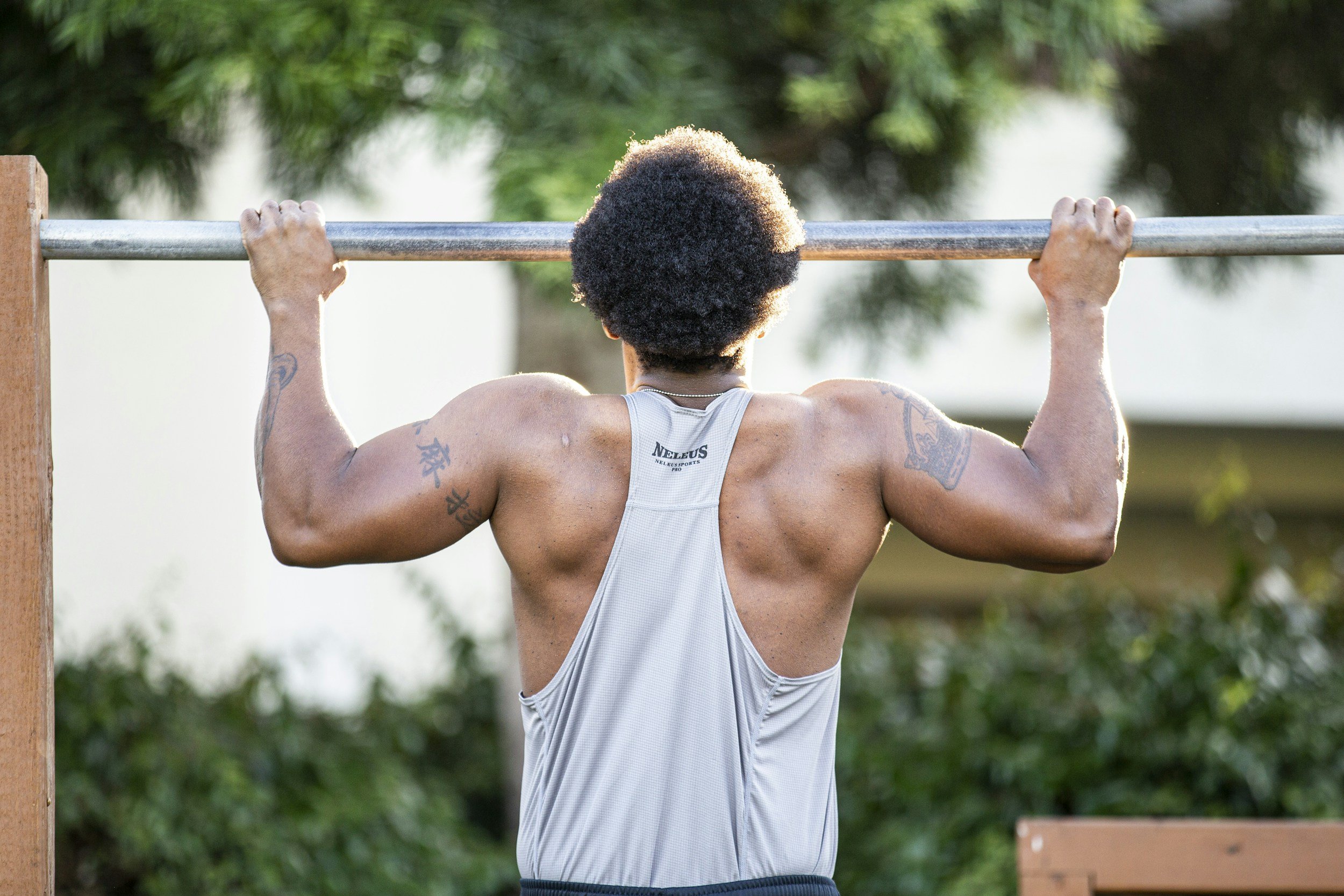
If you want to be an elite athlete, you have to be "strong for your size." This is called Relative Body Strength. You can bench 225lbs, but if you can’t do 10 strict pull-ups, you have a "power-to-weight" problem that will slow you down on the field. As a strength coach, I consider the pull-up a non-negotiable for every sport.

Want free elite athlete resources?
Join the Alta Pursuit Membership and get:
✅ Downloadable worksheets
✅ Athlete performance planners
✅ Elite Coaching Advice
The Physics: Scapular Stability & The Vertical Frame
In football, you need to "hand-fight" to get off a block. In soccer, you need to shield the ball against a 190lb defender. Both require Scapular Stability—the ability to keep your shoulder blades locked and powerful.
When you perform a pull-up, you aren't just using your arms; you are engaging your entire "Vertical Frame." By pulling your shoulder blades down and back, you create a rigid structure that allows you to transfer force from your upper body into your opponent. If your back is weak, your shoulders will "roll" forward, making you easy to push around and killing your postural efficiency during a sprint.
Case Study: DK Metcalf (NFL Wide Receiver)
Metcalf is a physical specimen, but his real "Tier One" edge is his upper-body control. Watch him "stiff-arm" a defender or jump for a contested catch. He is able to maintain his posture and power even while being pulled or shoved. This comes from elite relative strength. His back and shoulders are so stable that he can absorb contact without his "frame" collapsing.
The Technical Concept: The "Active Hang"
The biggest mistake athletes make is pulling with their elbows first. A Tier One pull-up starts with the Active Hang. You must depress your shoulder blades before you bend your arms. This ensures the "Big Muscles" (the lats) are doing the work, not just your small biceps. This "lat engagement" is the same mechanic used to stay aerodynamic and upright when you're running at top speed.
The 10-Minute "Vertical Frame" Protocol
Note: This is for technical refinement and "waking up" the muscles, not a max-effort workout.
| Time | Task | Focus Area | The "Why" (Student Focus) |
|---|---|---|---|
| 0-2 min | Scapular Pull-Ups | Shoulder Blades | Teaches you how to engage your back muscles without using your arms. |
| 2-4 min | Hollow Body Holds | Core Bracing | Ensures your core is "locked" so you don't swing like a pendulum on the bar. |
| 4-6 min | Negative Pull-Ups | Eccentric Strength | 5 seconds to go down. This is the fastest way to build the strength for your first 10 reps. |
| 6-8 min | Isometric Chin-Over-Bar | Peak Tension | Holds your chin above the bar for 10 seconds to build "finishing" strength. |
| 8-10 min | Med Ball Overhead Slams | Power Transfer | Immediately applies your "pulling" strength into a high-velocity downward strike. |
Tier One Tip: If you have to "kick" your legs (kipping) to get over the bar, you aren't building strength; you're just using momentum. Use virtual sports coaching to film your pull-up from behind. If one shoulder blade is higher than the other, you have an imbalance that is affecting your throwing or tackling mechanics.
ELITE ATHLETE COACHING
〰️
ELITE ATHLETE COACHING 〰️
Your "Tier One" Athlete Membership is the competitive edge you’ve been looking for. Get immediate access to exclusive tools and resources designed to sharpen your mindset and fast-track your path to Tier One Status in sports and in life. It's time to build the proof.