

Mastering Nutrition DURING Tournament Travel
Travel is a competitive disadvantage—but only if you allow it to be. When your routine is disrupted, your stress is high, and your only food option is a bus stop or a hotel buffet, your performance drops. Your nutrition system must remain non-negotiable, even when you're 500 miles from your home kitchen.

The ACL Armor: How to Injury-Proof Your Knees
The most devastating injury in student athletics is not the broken bone from a massive tackle. It is the non-contact ACL tear.
It happens in a split second. A receiver plants their foot to cut. A soccer player lands after a header. There is no contact, just a "pop."
The reality is that most student athletes are building Ferrari engines with bicycle brakes. They spend hours training to run fast and jump high, but almost zero time training to stop and land.
You cannot prevent 100% of injuries, but you can significantly lower the risk by building the right protection. Here is the Tier One protocol for building strong knees.

Mastering Macros, Timing FOR COMPETITIVE ATHLETES
Your body is your most important equipment. If you treat it like a Tier One machine, you must feed it Tier One fuel. Stop relying on myths—your nutrition is a science that directly supports muscle growth, resilience, and mental focus. Cutting corners on your plate guarantees plateaus on the field.

In-Season Lifting: Why You Must Lift During the Season
You spend all summer building your 'armour' in the weight room, only to take it off right before the battle starts. If you stop lifting during the season, you aren't 'saving your legs'—you are becoming fragile. By Week 8, when the hits are hardest, you will be at your weakest. This guide breaks down the 'Maintenance Protocol': how to lift heavy, protect your strength, and stay fresh for Friday nights with just two 30-minute sessions a week.

A Guide to Recovery and Performance FOR STUDENT ATHLETES
You can train like a pro and eat like a nutritionist, but if you ignore your sleep, you will perform like an amateur. "Sleep for athletes" isn't just about resting; it is an active physiological state where your body repairs muscle tissue and your brain processes the skills you learned at practice.
For the elite student athlete balancing school stress and physical load, sleep is your most important performance enhancer. This guide covers the essential sleep strategies you need to fix fatigue, maximize muscle recovery, and maintain high energy levels all season.

Build Muscle as a Vegetarian Athlete GUIDE
You don't have to be a full vegan to benefit from plant-based fuel. Many top NFL and NBA players use plant-based snacks to lower inflammation and recover faster between games.
But there is a trap: "Plant-based" does not mean "healthy." Potato chips are vegan, but they won't help you win.
To build muscle and stay lean without meat, you need to focus on Protein Density and Healthy Fats.
Here are the best plant-based snacks for athletes to keep in your gym bag for peak performance.

A Parent’s Guide to Protecting Your Athlete’s GPA
For any aspiring Tier One athlete, academics are not optional—they are the non-negotiable key that unlocks the recruiting door. Coaches eliminate thousands of prospects based purely on academic risk. Your job as a parent is to eliminate that risk by establishing a professional, proactive academic system.
How to Gain Weight Without Getting Slow
In football, size matters. Force = Mass x Acceleration. But too many athletes obsess over the "Mass" and destroy the "Acceleration."
If you gain 20 lbs of "dirty weight" (fat and water retention), you haven't built a better machine; you’ve just added cargo to a slow truck. The goal of a Tier One bulk is functional hypertrophy: adding contractile muscle tissue that can produce force, without adding non-functional weight that slows you down.
Here is the 4-step protocol to getting big while staying fast.
Volume Management for Soccer, Football and Track & Field ATHLETES
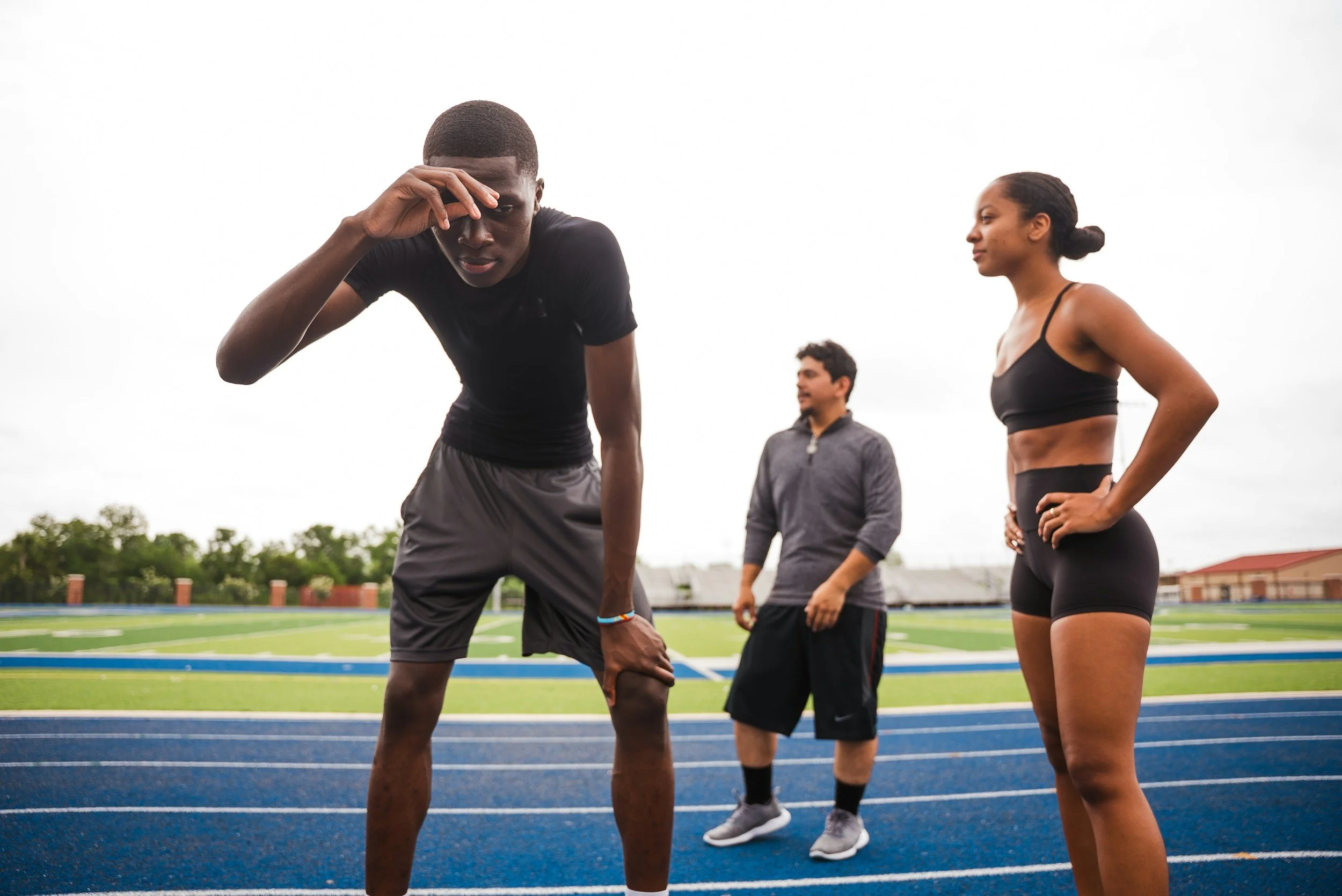
The most dangerous words in youth sports are "No Days Off." In the middle of the season, when academic pressure is peaking and your body is taking contact, adding more volume isn't discipline—it's negligence. Tier One athletes don't just work hard; they work with mathematical precision.
This guide gives you the exact volume benchmarks for your age and sport. If you are exceeding these numbers without a strategic recovery plan, you are in the Red Zone for injury and burnout.

A Guide to Handling Mistakes for Athletes and Parents
Every athlete misses the shot. Every athlete makes a bad pass. The difference between a player who quits and a player who gets better isn't talent—it’s how they handle those mistakes.
Failure isn't a disaster; it’s just proof that you are trying something hard. Here is a simple guide on how to handle the pressure before, during, and after the game.

A Parent’s Guide to Budgeting for COMPETITIVE SPORTS
As a parent, you are the Chief Investment Officer for your athlete's future. The commitment to Tier One status involves massive investments of time, money, and emotional capital. This article provides a clear framework to manage these risks, ensuring your investment yields maximal returns—the true competitive edge.

Six Non-Negotiable Soccer Rules For Match Day Victory
Your team has executed the fundamentals. They've logged the hours.
Now, the final 48 hours before the match are where amateur teams falter and Tier One teams lock in the win. This resource teaches you the communication protocols to transition your players from practice to performance, guaranteeing Total Focused Effort (TFE) when the whistle blows.

Is Journaling Worth the Time?
Let’s be clear: Your Alta Pursuit journal is not a diary. It is a performance log and a strategic planning console for your brain. If you think journaling is soft or a waste of time, you fundamentally misunderstand where your competitive advantage comes from. Your mind is your most powerful muscle, and the journal is your weight room.

Should I Quit My Second Sport? A Guide to Specialization
This is the toughest question for any ambitious athlete: When is the right time to cut the cord? The pressure to specialize is intense, but the risks are real—burnout, overuse injuries, and missing out on broader athletic development. Specialization is an earned privilege, not a requirement. Making this decision on emotion is a guarantee of failure; making it with objective data is a Tier One execution.
The Emotional Foundation For Elite Leadership
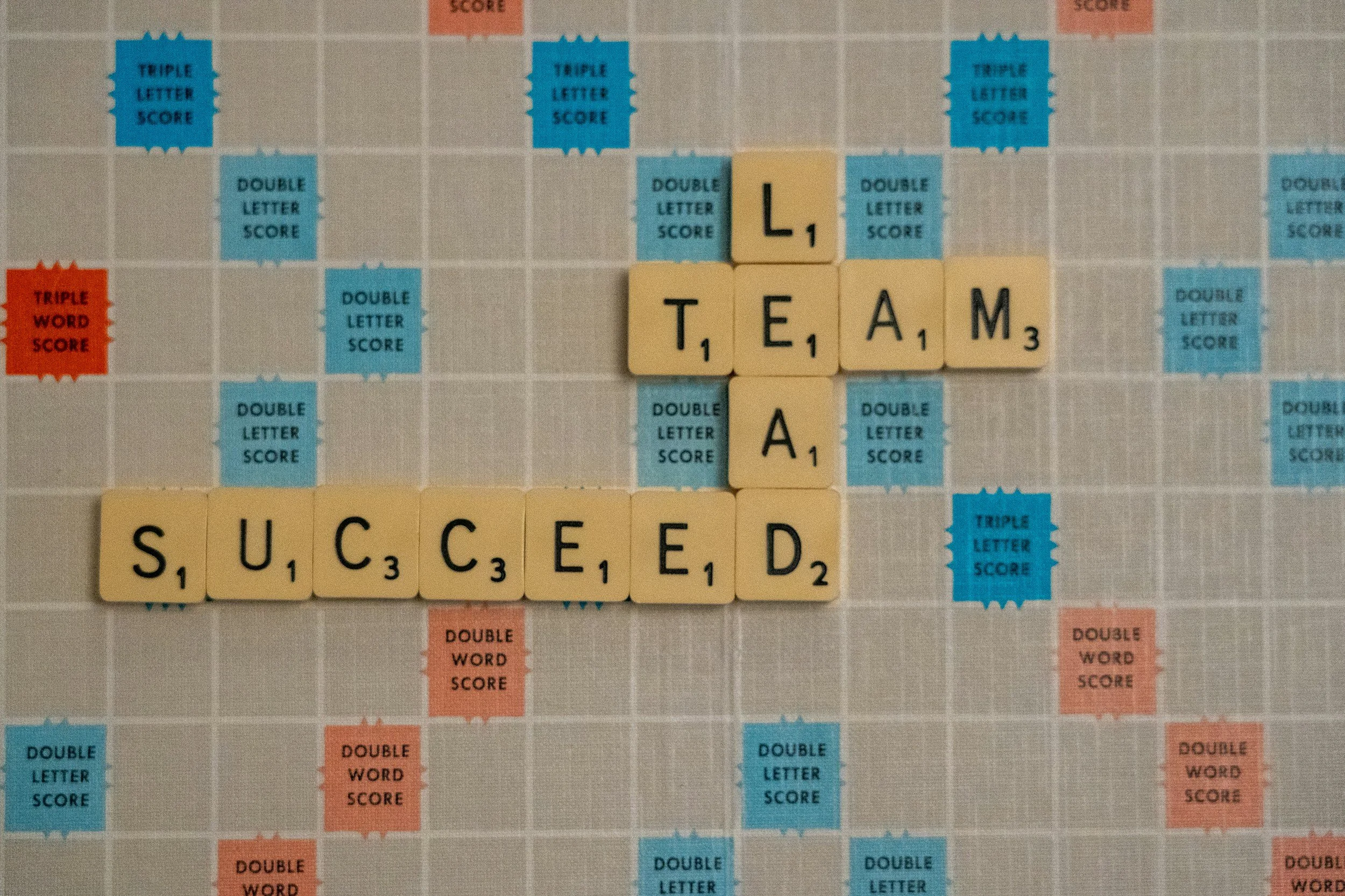
You want to be the best? Then you must be the leader. The "C" on the jersey is earned in the summer, not assigned in the fall. Leadership isn't about being loud; it’s about emotional regulation and setting the absolute standard that everyone else is forced to meet.

The Off-Season: Where Tier One Status is Earned
If you treat the off-season as a vacation, you are operating with an amateur mindset. The off-season is where Tier One status is earned. It is a strategic, non-competitive period designed for weakness analysis, foundational gains, and the necessary physical variability that prevents career-ending injuries.

the 3 Non-Negotiable Metrics College Coaches Actually Look For
You have a massive goal—D1, scholarship, or professional status. Great. Stop waiting for coaches to find you. You need to present yourself as a solved problem—an athlete who is ready to execute from Day One. Coaches don't just look at stats; they look for predictable performance, intellectual maturity, and low risk.

Why You Need to Master Sleep Tracking and Fuel Timing
You are pushing your limits daily. You spend hours optimizing skill and strength, yet most young athletes ignore the single most powerful competitive advantage available: Recovery. If you’re getting slower or weaker while training hard, the problem is not your effort; it’s your rest.

3 Simple Rules for Balancing Practice and CLASSWORK
Let’s be direct: You have Tier One ambition, which means you cannot afford to sacrifice grades for training, or training for grades. Burnout isn't a lack of motivation; it's a failure of scheduling. If you're stressed and losing focus, your planning system is broken.

How to Design Your Pre-Game Mental Protocol
We need to talk about the crunch time, the moment when the lights get bright and the pressure turns your talent into mush. Most athletes call this choking. I call it untrained focus. Choking isn't a lack of talent; it's a lack of a practiced mental system when fatigue hits. You wouldn’t show up to the weight room without a program—so why would you show up to a championship game without a mental one?